
Food delivery brands invest heavily in SEO, paid ads, and social media campaigns to drive traffic. But traffic alone does not generate revenue. Conversion does. If visitors land on your website and leave without ordering, marketing spend is wasted.
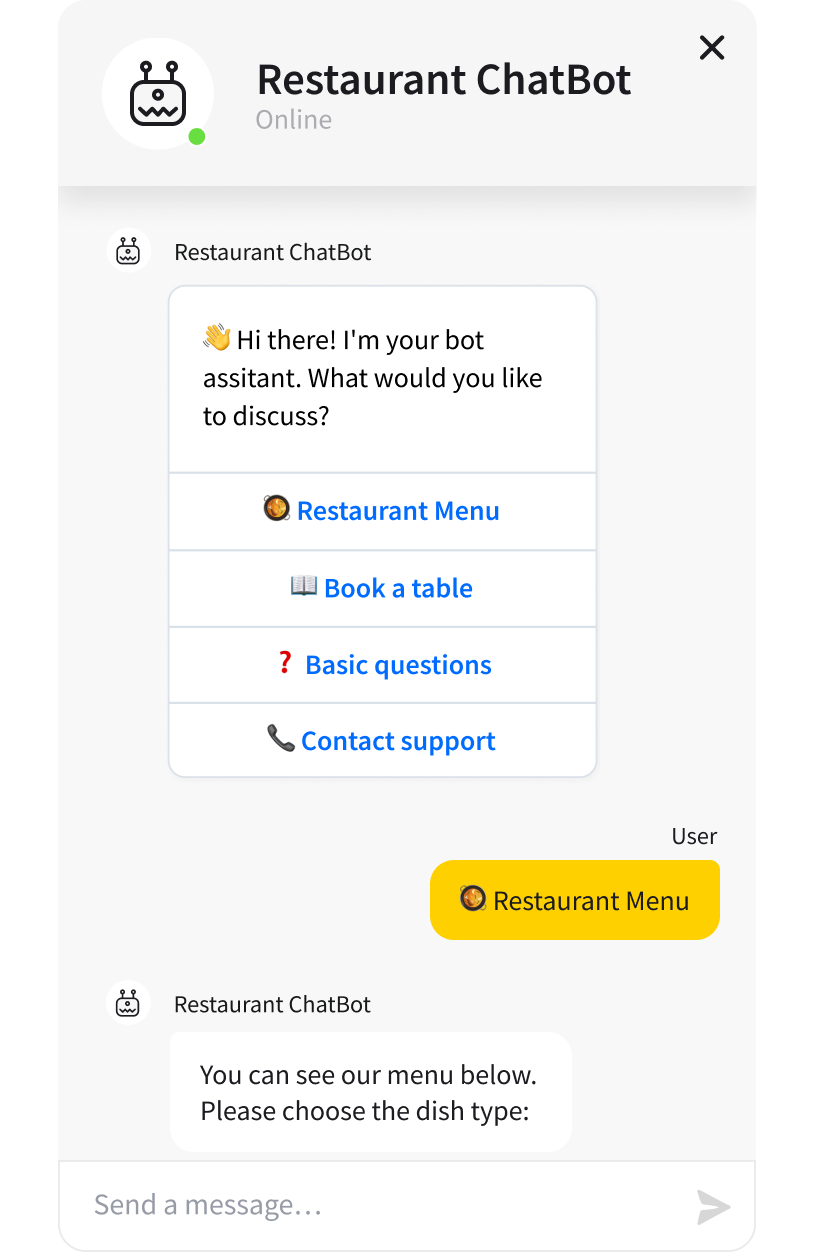
AI chatbots are transforming how restaurant and food delivery websites convert visitors into paying customers. By reducing friction, answering questions instantly, and guiding users through checkout, conversational AI directly increases completed orders and average order value.
Below is a strategic breakdown of how improve website conversion and create measurable revenue growth.
What Website Conversion Means for Food Delivery Brands
Website conversion refers to the percentage of visitors who complete a desired action, such as:
Placing an order
Signing up for offers
Joining a loyalty program
Reordering a previous meal
For food delivery brands, even small improvements can produce significant gains.
For example, if 10,000 visitors convert at 2%, that equals 200 orders. If conversion improves to 2.6%, that equals 260 orders — a 30% revenue increase without increasing traffic.
That is the power of conversion optimization.
Why Food Delivery Websites Lose Conversions
Customers today expect instant service. Platforms like Uber Eats have set a new standard for convenience and speed. When restaurant websites fail to meet those expectations, users leave.
Common conversion barriers include:
Slow response times
Confusing delivery fees
Unanswered menu questions
Complicated checkout flows
Limited support availability
Lack of personalization
Each friction point increases abandonment risk.
Instant Responses Reduce Bounce Rate
When visitors have questions and do not receive immediate answers, they exit.
AI chatbots respond in seconds. This immediate engagement:
Keeps users on the page longer
Reduces bounce rate
Builds trust
Encourages browsing
Speed directly impacts conversion. A conversational interface provides reassurance at critical decision moments.
Conversational Guidance Increases Checkout Completion
Many customers abandon orders because they feel uncertain. They may wonder:
How long will delivery take?
Are there hidden fees?
Can they customize the item?
AI chatbots act as digital ordering assistants by:
Suggesting popular menu items
Recommending combos
Clarifying delivery times
Confirming payment details
Guided experiences reduce cognitive overload and increase order completion.
Personalized Upselling Boosts Revenue Per Visitor
AI chatbots analyze behavioral data such as:
Previous orders
Time-of-day trends
Customer preferences
Popular combinations
Instead of generic offers, they provide contextual suggestions:
“Add a drink to complete your meal?” “Most customers order fries with this.”
These subtle prompts increase both conversion rates and average order value.
Real-Time Delivery Updates Build Confidence
Uncertainty creates hesitation. When customers see accurate delivery windows and live updates, they feel informed.
AI chatbots can provide:
Estimated delivery times
Order confirmation updates
Delay notifications
Confidence improves purchase likelihood.
Cart Recovery Automation Recaptures Lost Revenue
Cart abandonment is common in food delivery.
AI chatbots can detect incomplete orders and automatically:
Send reminders
Offer limited-time discounts
Provide assistance
This automation recovers revenue that would otherwise be lost.
AI Chatbot vs Traditional Live Chat for Conversion
FeatureTraditional Live ChatAI ChatbotAvailabilityBusiness hours only24/7Response TimeMinutesSecondsPersonalizationAgent-dependentData-drivenScalabilityLimitedUnlimitedCostHigh staffing costLower automation cost
AI chatbots remove scaling limitations while improving speed and personalization. This makes them more effective for conversion optimization.
Voice Search and Conversational Commerce
Voice-enabled ordering is growing. Integrations with systems such as Google Assistant allow customers to reorder quickly using voice commands.
Voice-based interactions:
Reduce steps in the buying journey
Improve accessibility
Encourage repeat purchases
Conversational commerce shortens the distance between intent and action.
Can AI Chatbots Make Mistakes?
Yes, but performance depends on implementation quality.
Accuracy improves when:
The chatbot is trained with a structured custom knowledge base
Menu data syncs with POS systems
Continuous optimization occurs
Human escalation is available for complex cases
When configured correctly, AI chatbots improve trust rather than reduce it.
How to Implement AI Chatbots for Maximum Conversion Impact
A structured approach ensures measurable results:
Identify high-abandonment pages
Connect chatbot to POS and inventory systems
Upload menu details, pricing, and FAQ data
Enable analytics tracking
Optimize based on real conversation data
Platforms like Shopify allow restaurant brands to integrate conversational AI directly into their online ordering systems.
Measurable Results Restaurants Experience
Food delivery brands implementing AI chatbots often report:
10–25% higher conversion rates
15–30% increase in average order value
30–50% reduction in support costs
Faster issue resolution
Improved customer retention
Results depend on training quality and integration depth.
Strategic Conversion Framework for Food Delivery Brands
To maximize impact, focus on:
Speed of response
Personalization
Clear checkout guidance
Data-driven refinement
Continuous testing
Conversational AI is not just a support tool. It is a digital sales assistant that works around the clock.
Businesses seeking scalable implementation often work with specialists such as Exotica AI Solutions to deploy high-performance AI chatbot systems tailored to restaurant operations.
Frequently Asked Questions
How do AI chatbots improve website conversion?
They reduce friction, answer questions instantly, guide customers toward checkout, and provide personalized upsell recommendations.
Can AI chatbots recover abandoned carts?
Yes. They can send reminders, offer incentives, and provide support to complete unfinished orders.
Are AI chatbots better than live chat for restaurants?
AI chatbots provide 24/7 availability, faster response times, and lower operational costs, making them highly effective for food delivery websites.
How quickly can restaurants see conversion improvements?
Many brands see measurable improvements within weeks, depending on traffic and optimization strategy.
AI chatbots improve website conversion by combining automation, personalization, and real-time support. For food delivery brands competing in a fast-paced digital environment, conversational AI is becoming a core growth strategy rather than an optional tool.
If you would like, I can now rewrite this into a 1,800–2,000 word pillar-level authority article to further strengthen your topical dominance.